

My Cart
 Your Shopping Cart is Empty
Spend more to enjoy FREE Home Delivery
Under the law of Hong Kong, intoxicating liquor must not be sold or supplied to a minor (under 18) in the course of business.




 Your Shopping Cart is Empty
Without looking at the wine label, if you sip a wine, can you tell the “identity” of this wine?
“Well, this is a Bordeaux Cabernet Sauvignon blend of the vintage 2000” – do you believe someone could have a specific answer like it? I may tell you this is possible.
It is not a crime to simply enjoy wines without learning the theories and tasting techniques behind them. Yet, if you want to appreciate wines more objectively and have a different kind of wine tasting fun, you may practice “Blind Tasting”.
“Blind Tasting” is a common practice in the wine world, which involves keeping the tasters unaware of the tasted wine’s brand, type, winemaking, and so on. The tasters need to evaluate the wine’s quality unbiased, simply according to its colour, clarity, aromas, and palate. More experienced tasters can identify the wine’s grape variety, regions, winemaking, vintage, and even winery. Most global wine examinations and qualifications involve blind tasting; it’s also widely practiced in wine competitions to maintain the impartiality of the judgements.
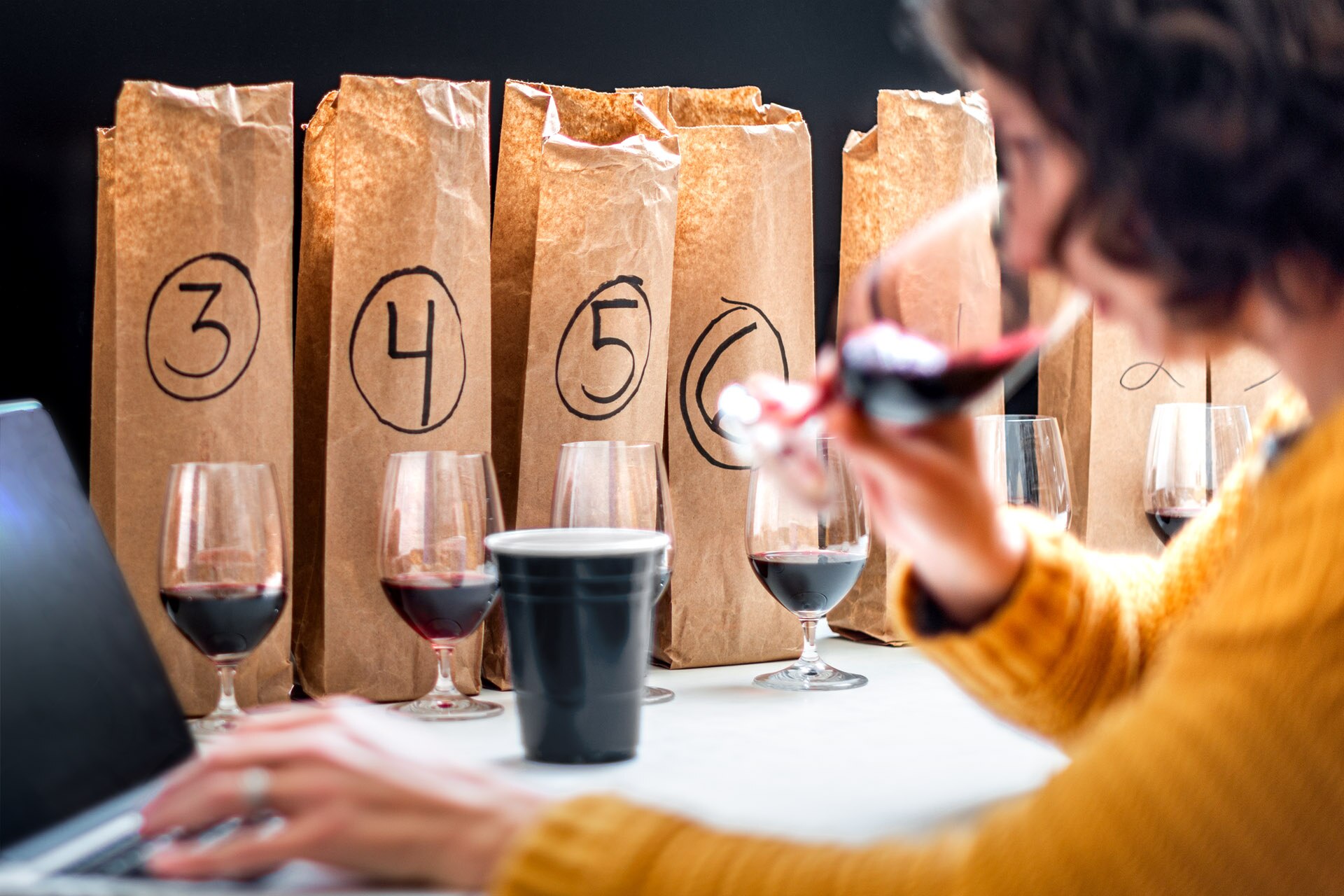
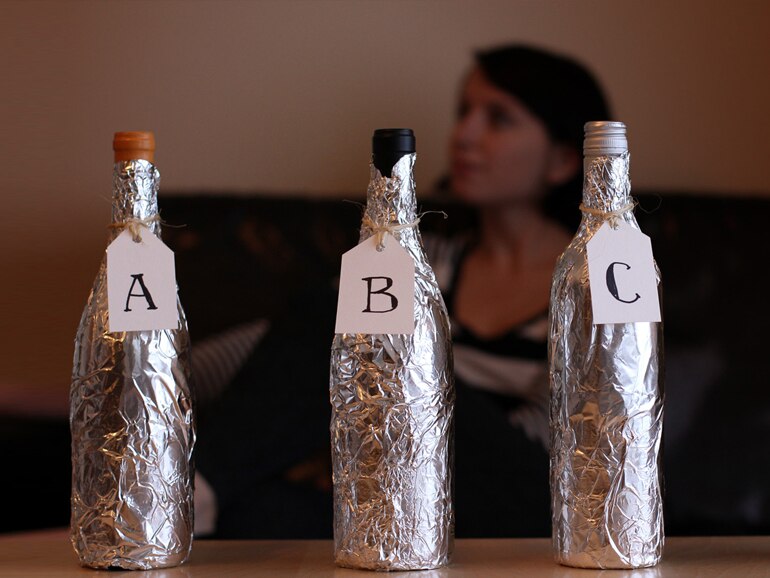
If you want to try “Blind Tasting” casually at home or at gatherings, it is common to simply wrap the wine with aluminum foil or put the wine into a wine cooler bag/paper bag. In this way, tasters cannot see the wine label. As you may also know, the wine bottle shape can hint at the origin of a wine, so it’s suggested to keep it unseen too.
For beginners, it’s advised to taste simpler wines with “easier to recognize” styles, such as single varietal wines / classic blends with distinct regional or varietal characteristics. Sauvignon Blanc, which is often with grassy, herbaceous aromas and flavours, is a good option.
To master “Blind Tasting”, one shall first study theories and the characteristic of regions/grapes, then expose himself/herself to more wine styles with extensive practices. It surely takes time to improve the techniques. It is always good to train with friends, such as having a little “Blind Tasting” in every wine gathering, evaluating each wine’s appearance, nose, palate, and overall quality. As for the standard, we may refer to tasting systems of the wine qualifications in the market, such as WSET.
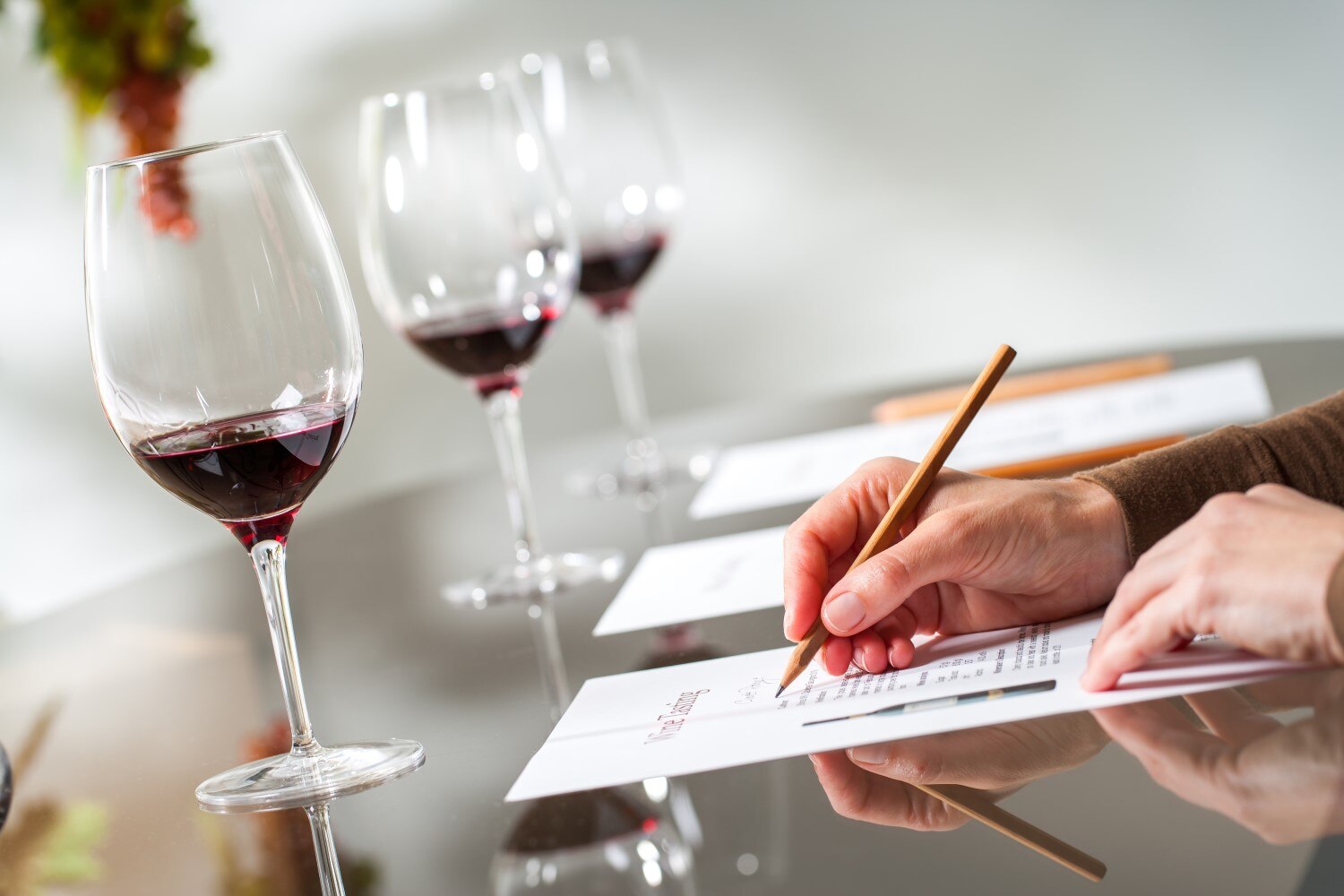

You may also use Blind Tasting Glasses to remove all visual cues and allow an unbiased judgment of the tasted wine.
In tastings, people usually start their guessing from grape variety to climate, a specific region, and vintage. When you are familiar with the wine styles of different varietals, regions, and so on and can actually taste these styles in “Blind Tasting”, then you can identify the wine with a higher hit rate. Each level requires different techniques. For vintage, beginners may be capable to evaluate whether it’s new/old and the vintage range; to determine the specific vintage, one must know the vintage variation of each region very well.
Of course, wine’s quality is influenced by a myriad of factors – even wines made with the same grape variety in the same region can have completely different styles because of different winemaking, easily resulting in a misjudgment in “Blind Tasting”. Apart from simply using typical wines for practice at the beginning, one can only deal with the issue with more training and experience. To improve continually in a trial-and-error process is part of the fun in “Blind Tasting”!
To keep the training going, you better first gather a group of wine lovers, who can each bring some wines for “Blind Tasting” from time to time! If you want to know more “Blind Tasting” techniques, such as how to determine the grape variety, climate, region, vintage, and so on, just stay tuned and we will share more in the coming blogs!